In addition to the team project, this course developed my ability to approach engineering problems through structured design thinking and quantitative analysis across a range of assignments. Through reverse engineering, I analyzed a consumer product’s materials, geometry, ergonomics, and cost, and built a labor-based manufacturing model to estimate production cost. In needs finding, screening, and concept development assignments, I translated real-world pain points into clear problem statements, generated and narrowed hundreds of ideas using structured brainstorming and decision matrices, and defined measurable engineering requirements. I also developed and evaluated multiple concepts to identify solutions that balanced feasibility, impact, and usability. In systems modeling, I used MATLAB/Simulink to build a discrete event simulation with queues, servers, and decision logic to analyze system behavior. Additionally, through skill-building work, I expanded into new technical areas including biomedical 3D reconstruction using 3D Slicer, motor control and circuit design through breadboarding and H-bridge systems, and AI-assisted app development using Vibecode. Across these assignments, I strengthened my ability to move from open-ended problems to structured, data-driven engineering solutions while gaining experience with a diverse set of technical tools.
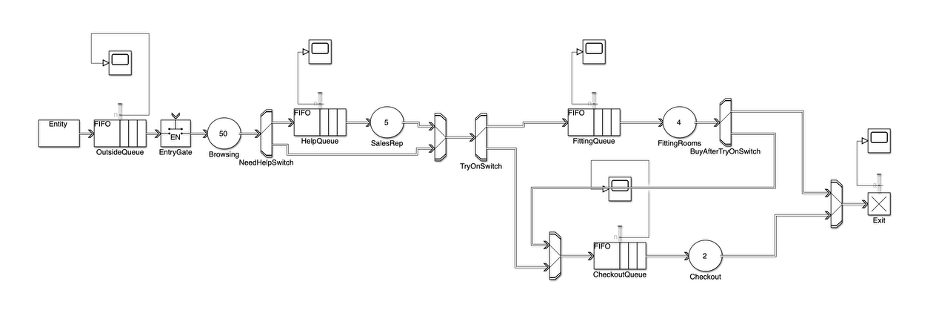
MATLAB/Simulink System Model
Optimized Fire Containment Cover Deployment System for Emirates
For this project, our team partnered with Emirates to develop a system to improve the deployment of fire containment covers (FCCs) used in aircraft cargo operations. The current process is manual, time-consuming, and requires multiple operators and a forklift. Our goal was to reduce deployment time, labor, and complexity while maintaining safety and effectiveness.
Through an iterative design process, we shifted from optimizing individual steps to redesigning the overall workflow. Our final solution combines a pre-loaded 80/20 frame with a winch-based lowering system and a four-side pull lacing mechanism. The frame allows the blanket to be positioned in advance, eliminating manual alignment and forklift use, while the lacing system enables faster and more consistent tensioning.
I contributed to the mechanical design and fabrication of the system, including CAD modeling, material selection, and prototyping. I developed multiple CAD iterations, refining an initially more complex and expensive design into a simpler, cost-effective frame that maintained functionality. I was also involved in machining and assembly, including waterjet cutting and integration, translating our design into a working prototype. I additionally took initiative in leading the team to ensure we stayed on track and successfully completed the project.
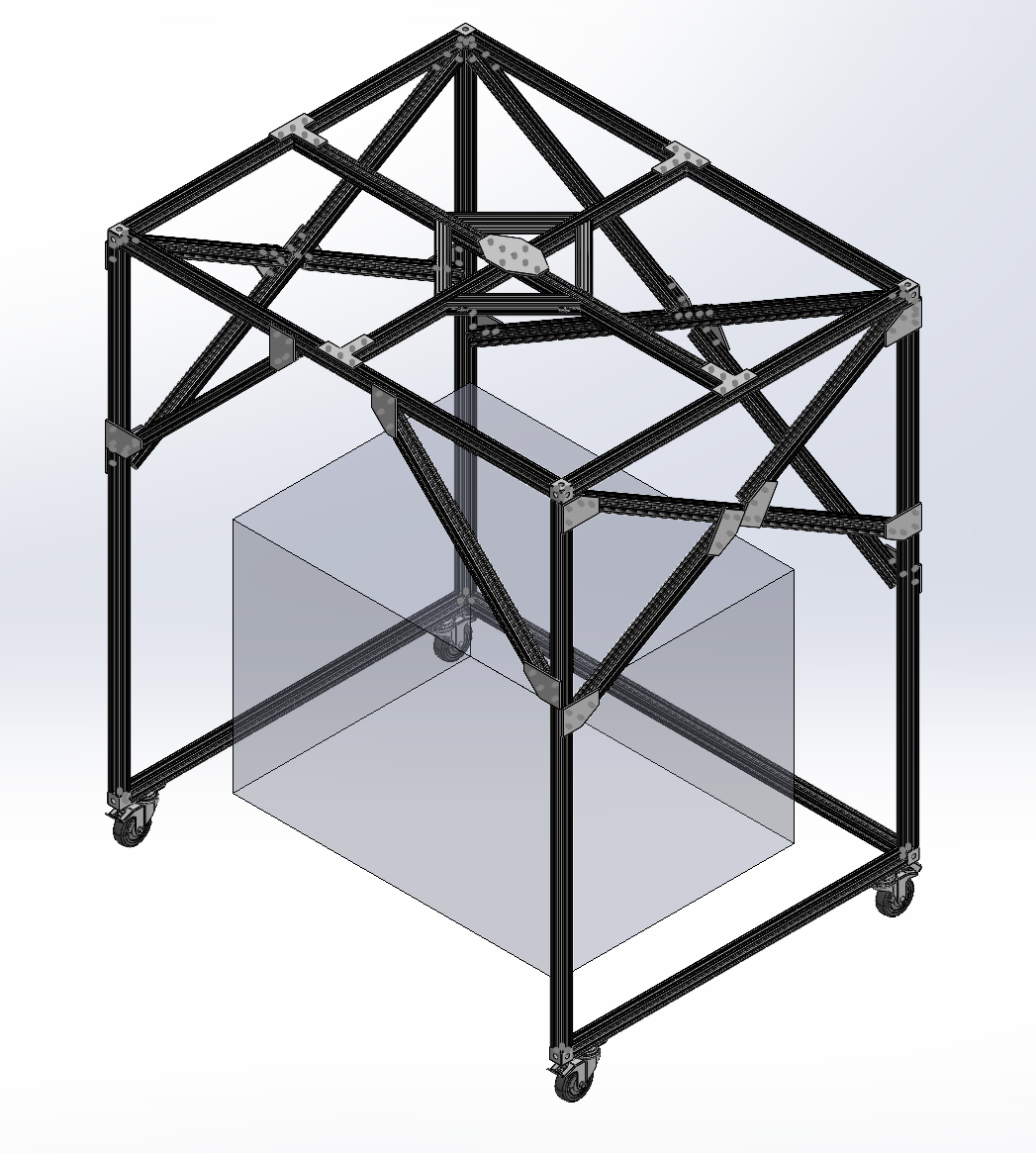
Initial CAD: complex, high-cost
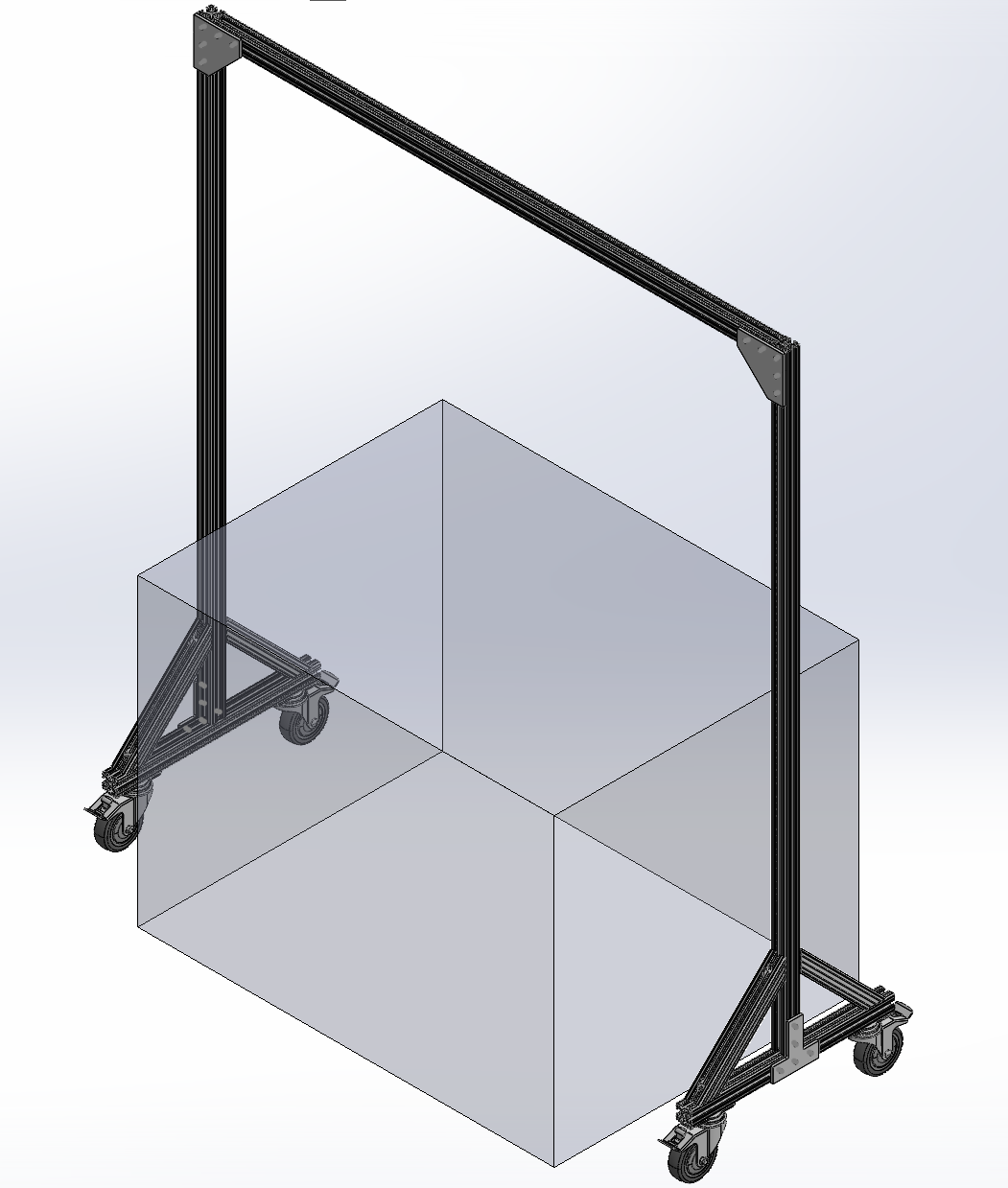
Final CAD: simplified, cost-efficient